Showing posts with label India. Show all posts

Tuesday, April 6, 2010

Is a capitalist society a more advanced society?

This post will cover the essence of Capitalism and that manner in which it is currently being operated in India . This Post is supposedly a rejoinder to Anurag Ji's post Here and SandeepJi's post Here . Anurag has spoken comprehensively on the ill effects of India's capitalistic approach for economic growth while Sandeep has confronted him , err... a bit aggressively , but that is part and parcel of a debate having two ingeniousness on the panel !
My opinion is as follows :

Capitalism in simple words may be described as a system where in the resources in hand, work machinery , and end product are privately owned and traded in the free market. The investor is the ultimate decision making authority in the capitalistic economy. A capitalistic economy enjoys autonomy in respect to terms modus operandi , the government does not interfere with the day to day operations ( Laissez-faire ) but  influences the capitalist economy by enacting policies which safeguard the  fundamental rights of the human resources embraced by the capitalistic economy, as enshrined in the Indian Constitution. Hence, we may conclude that a capitalistic economy works with the underlining principle " Survival of the Fittest "- the idea first propounded by Charles Darwin .
Now comes the point where you must be anticipating me to either speak in favor of , or against the notion of  a capitalist economy, i ask you to judge my stance adopted, at the end of the post. 

The relationship between Capitalism and Democracy is a contentious area in theory as well as in popular political movements. I must recall that Democracy was born along side Industrial capitalism-which began with the Industrial revolution in the British empire- during the early 19th century and spread to many parts of the world, leading many scholars to believe that there exists a directly proportional relation between the two or atleast to a conclusion that one affects the other. It was only in the 20th century that with the help of empirical analysis scholars observed that a capitalist economy  also accompanied a variety of political formations quite distinct from liberal democracies including fascist regime, monarchies and single party states. Let me simplify the relation between Capitalism & democracy : Democracy promises Equality & Freedom , whereas , Capitalism provides free market and competition - Survival of the fittest , hence, we have a relation where for one to work the other must be subverted.
Does this mean that we must bring and end to capitalism to save democracy ?
The answer to the above is " Don't be ridiculous " . In India, many liberal elites, i.e self proclaimed guards of democracy like Arundhoti Roy , Medha Patkar , Magsaysay awardee Sandeep Pandey have advocated the ill effects of capitalism and how it poses a threat to democracy. I do not say that a capitalist economy serves all individuals on a same platform , but why must it serve every one equally ? We must learn the law of the nature, to survive one must work hard and compete with the rest of its kind. 
Why don't we eat sweet food for a month , boiled in the second  and spicy in the third month instead of having a hybrid diet? The common answer would be "It doesn't work that way" , the same goes to all those who are apprehensive of Capitalism operating simultaneously with democracy ! Thus, we must function so as to feed India with a hybrid diet of democracy and capitalism .
 In the age of  globalization, where there is a stiff competition between different economies of the world to provide its people with a more dignified , comfortable & safe lifestyle , we cannot think of having disparity in operating standards between domestic and international economies. Imagine a socialist economy competing in a capitalist world ? LoL! 
It is a undisputed fact that good education provides knowledge and knowledge yields wisdom. When India competes with other world economies, it must be well prepared and well trained to understand the modus operandi of other economies de jure . For this purpose people apply for higher educational courses like MBA, where, the individuals are taught how to survive in the competent global environment. 

Capitalism deprives the countrymen of property ownership rights, this is a much debated criticism of a Capitalist economy. To this i  have a very simple answer : Don't we equate our country with our mother? If you do, then how can you wish to own her? This may sounded very melodramatic so let me rephrase it this way : How can those, who talk of social equality, now not consider equal right of all citizens on the country's land ? It is to make sure that benefits of a country's natural resources are enjoyed by all its people, that the property ownership is nullified in India, ironically this is a socialistic principle.

Many intellectuals have coined the term 'wage slavery' in protest of capitalism. No doubt that the term is innovative and credible to the context that it is used in. Capitalism sure has unleashed unprecedented competition in every nook & cranny of the world . In the consciousness of not being left behind and to fulfill their materialistic desires, people exploit themselves to a maximum where their body starts nesting diseases like high blood pressure, cervical spondilitis, joint pain , loss of eye sight &  gastric disorders , etc. 
But, why is capitalism to be blamed ? In this context, it is clear that Capitalism has provided us with opportunities to lead a better lifestyle, we must learn to balance work with leisure and exercise control over greed to work more to earn more. Must remember that there is something known a satisfaction, that needs to be realized. If we feel exploited at any point, due to our work load, we must be upfront with the capitalist lords and inform them on the provisions of India's Constitution which ensures that we are not exploited  (Article 23 & 24) and that our freedom and life is secured (Article 19,20,21, 22) . I agree that capitalists indeed have an inclination to monetary profits over all. To confront this, the Government has also enacted laws to ensure the social security of the employees/labor  such as Industrial Disputes Act 1947, Employees State Insurance Act 1948, Workmen's Compensation Act 1923 & Maternity Benefit Act 1961 in the organized sector and laws like Aam Admi Bima Yojna & Rashtriya Bima Yojna, both implemented in 2002 for unorganized sector labors.

I very vividly remember that PSUs used to function as a non-profit organization until the economic crisis of 1991, where by it realized that in order for the inclusive development of the organisation & the country , and to maintain equal distribution of wealth, the PSUs will have to work with  securing certain amount of profit that is used  in the overall development of both the PSU & the nation.

It would be unfair if i did not bring into light the two most cruel and incurable- by current policies - ill effects of capitalism. No prize for for guessing, yes, its called Corruption & Immorality ! Corruption in government institution was born during the late 1960 during Indira Gandhi's government at the center, which enjoyed strong 'friendly' relations with all corporate houses of India. Tenders were passed by the merit of political nexus rather than the grounds of financial credibility and  work experience. We shall not discuss this further because i have no intention of landing into jail for maligning the infamous corrupt Nehru Parivaar. Immorality is again a notions that differs from person to person, what may seem wrong to me , could be your right. Hence, we need autonomous law & order machinery to keep a check on this. Also, can please empower the CAG of India to make sure that governments business as usual is not only scrutinized but the flaws, if any, can be corrected at the earliest.

To curb the corruption and immoral acts by professionals of major fields like Media, Corporate houses, Hospitals etc , the government must enact laws that 'cap' the unscrupulous wealth of people; for say the owner and an enterprise cannot draw a salary more than 10 lacs/ month, an organization that has an annual profit of more than 100 crore shall pay twice the taxes than at the moment, money laundering or Hawala must be checked.   I have just mentioned a concept , the actual law must be enacted post pragmatic analysis and free of attempts to satisfy the vested interests of petty politicians. 

Last but not the least , should we believe that a Capitalist Society is a more advanced society? The answer to this question lies in one's understanding of the word 'advanced' . 
World GDP per capita between 1500 and 1998 expressed in the 1990's international dollars. Graph is derived from data in Table B-18. (World GDP) and Table B-10. (World Population) published in The World Economy: A Millennial Perspective by Angus Maddison, OECD, Paris 2001


A 15 years old child teaching his grandparents how to use an i-phone is capitalism, watching James Cameroon's Avatar in 3D is capitalism , taking your beloved on a long drive with an excuse to have an ice-cream is capitalism and most important of all, reading this post on your laptop or mobile is capitalism ! These examples project the true essence of Capitalism. If you curse capitalism, then my friend, you have a problem with capitalists and not with capitalism! Hence, we must do our best to balance capitalism with democracy while confronting the capitalists with the help of the Fundamental rights enshrined in India's Constitution .
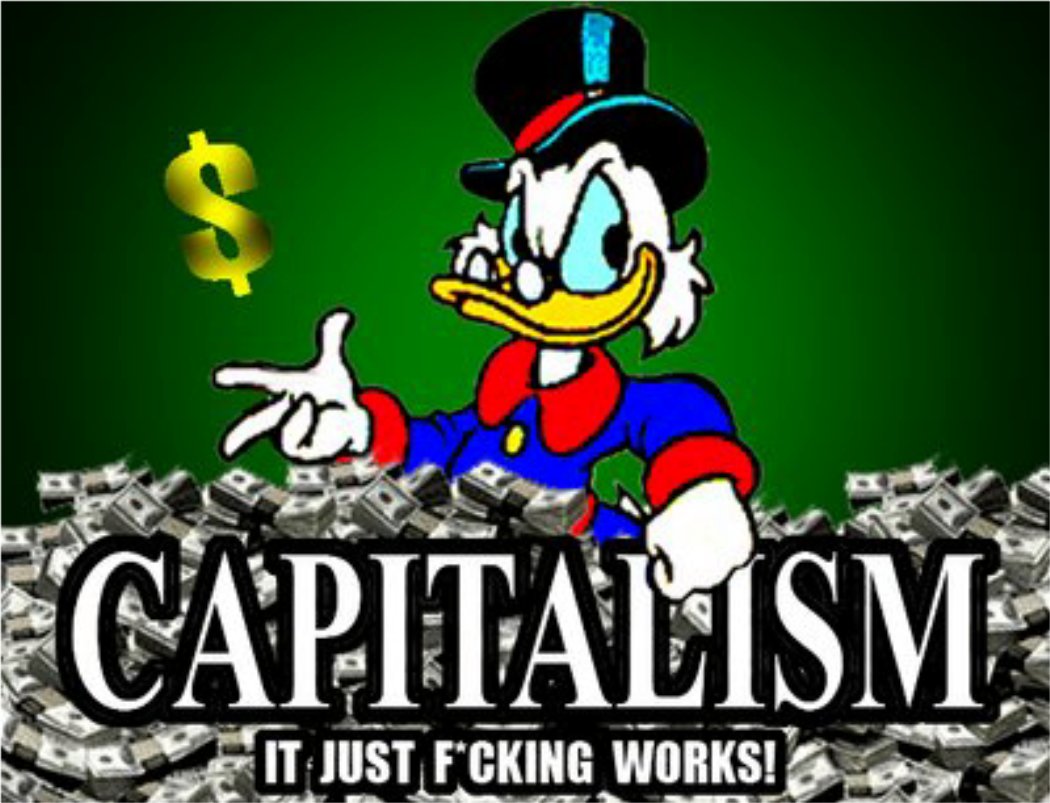

My point for the conclusion is that we as people must not be wary of Capitalism, because, it is just a notion, a concept , an idea to make sure that people lead lives in a more dignified & comfortable manner, but, nevertheless be cautious and vigilant of the selfish, exploitative acts of the capitalists. Today, India needs its people to lead their lives with an optimistic & moral approach, with no fear in their hearts but only a zeal to contribute in India's inclusive growth  .  

India only needs the efforts of two people to outperform its competitors , one is me and the other is you !

Jai Hind !
Akhil Rana

Thursday, April 1, 2010

India's problems in regards to Crude Petroleum


At present India faces the following threats to its economic growth:

1. Rapidly growing fiscal deficit which is currently scaled at 6.7% of GDP.
2. Huge import of Crude Oil, which eats India's Forex reserves and amounts to 77% of the Oil  
     consumption in India.
3. Spiral downfall of India's Agriculture sector which employees 52% of India's population and  
     contributes to 19 % of its GDP.
4. Untapped Renewable Natural Energy sources .


As Jim Rogers, of Rogers Holdings in Singapore has pointed out in regards to India, "with overall debt at 80% of GDP the country is on the edge of what is containable". If we go by this statement then it means that it is high time that we start having positive BOP's which, unfortunately ever since 15th August 1947 has been on the negative scale.

Now, Balance of Payment(BOP) is negative when a country is importing more and exporting less. A crucial role is also played by the currency of the country to balance the BOP and result a country to be a debt free Nation.

But whats stopping us from that?... aren't we getting richer every year and keep boasting of more Billionaires in the Forbes top 10 list ! We have certain major problems that hinder our race to prosperity and peace.

In the interim Budget 2010-2011 tabled in the parliament, there was absolutely nothing of significant importance for the so called 'Aam Aadmi'. I thought of analyzing that what exactly is this 'Aam Aadmi' that the GoI was determined to help to prosper, a fact mentioned in the election manifesto of the INC.

A study by National Council of Applied Economic Research (NCAER) projects 98.1 million household with projected income between Rs 16001 - Rs 45001. In respect to the Suresh Tendulkar commitee's report 2009, any household below a monthly income upto Rs 16000 should be projected below the poverty line. Interestingly, these 98.1 m households play the most crucial role in the sustainability of both the poor and the rich.

But, the interim budget had nothing substantial for these people, as a result the stock rose to 350 points within 2 hours. This is mainly because stocks is the most widely mode of investment for the middle class. Gold at Rs 16,700 was slapped with a further Rs 300/10gm tax. This was just the beginning, very next day petrol & diesel prices surged by Rs 2.68 & Rs 2.58. All this at a time when the country is facing an all time high inflation of 17.8% is in one word 'Preposterous' !

Lets find out what causes the GoI to increase the fuel prices ?

During 2004-2008, when the crude oil price was increasing, India was one of the few countries where petrol prices decreased. During this time, three high-level committees were formed to take a look at how to handle petroleum prices. In 2006, the Rangarajan Committee was formed, followed by the Chaturvedi Committee in 2008 and the Kirit Parikh Committee in 2009.

All three recommended that oil companies be allowed the freedom to fix prices. But the Government, headed by an economist, has been unable to implement them. This is because politicians do not like to lose the opportunity of making black money, to the extent of Rs 35,000 crore a year, by diverting subsidised products.During the last six years, there have been under-recoveries of Rs 3-lakh crore by PSU oil marketing companies while Reliance and Essar closed their petrol stations. This money could have been used to build thousands of schools or hundreds of hospitals to serve the poor better. But in the name of helping the poor, politicians belonging to all parties want the government to control petroleum prices.All three committees had suggested that PDS kerosene be distributed through smart card or the coupon system to prevent its diversion.

Before we jump on to any conclusions, lets analyse this:

A barrel of crude is equal to 158.987 litres, which means that the weighted price of $80 a barrel implies that a litre of crude costs about 50.3 cents, or Rs. 23.1 a litre (assuming that a dollar is worth Rs. 46). Incidentally, a large part of the confusion in the media about the “losses” of the oil companies is caused by the fact that the quantity is expressed in barrels while ordinary consumers actually feel the pinch in rupees for every litre.

The cost of crude oil refining, which is essentially the process of converting crude to products such as petrol and diesel, varies a lot depending on a host of factors. But it depends critically on the grade of crude used and a refinery’s vintage. The refining margins would vary but they would range at the most from about 20 paise a litre for Reliance Industries’ refinery at Jamnagar in Gujarat to about Re. 1 for an old refinery.

This means that in respect to this , under the current situation the price for Petrol & Diesel must not go beyond Rs 25/litre! The rest of Rs 23 is added due to the Freight Surcharge Pool Account and CST/Sales surcharge scheme. These are protection mechanisms to safeguard the under-recoveries that the GoI projects as its losses.

On June 4,Prime Minister Manmohan Singh justified the hike by citing their “under-recoveries,” which he claimed amounted to about Rs. 2,45,000 crores. The Prime Minister was, of course, careful in his choice of words. He termed them “under-recoveries” rather than outright losses.

Let us understand the term “under-recoveries” with this example :

Suppose i buy a piece of land for Rs 50 Lacs and plan to send it at Rs 90 Lacs after a period of 2 years, but , unfortunately, due to XYZ reasons i manage to sell it at Rs 70 Lacs, then, 20 Lacs is the under-recovery of my investment. In other words, a fallback from a hypothetical projection of profit is termed as under-recovery. Is is clearly different from the term "losses". So, the man who revived India from its worst economic nightmare in 1991 is now eye-washing the people, towards whom he has an obligation to provide socio-economic justice? Perhaps, this is for the readers to decide at their own discretion.

If there were losses in the Oil and Natural gas sector, How could ONGC meet the stiff criteria to achieve the Maharatna status?

ONGC has reported its first gain in five quarters by registering a 5.9 per cent increase in its net profit during the second quarter of 2009-10. The net profit for the quarter stood at Rs 5,090 crore (Rs 4,808 crore for the corresponding quarter previous year). This is on account of lower subsidy outgo and higher per barrel realization on crude oil sales. The performance of the oil companies does not suggest that they are on the verge of a collapse. IOCL’s gross refining margins — the difference between the market price for crude oil and the market price for fuel — was $9.1 a barrel in the April-December 2007 quarter, increasing from $ 3.6 in the same quarter of the preceding year.

Does this mean the problems of the public sector oil companies are entirely fictitious? At present the OMCs do face a problem of accessing crude oil in the international market, especially at competitive rates. However, this appears to be more of a short-term cash-flow problem rather than outright losses. The Reserve Bank of India has purchased bonds issued by the government to the oil companies, thereby providing some relief to them.

It is also true that the public sector oil companies sell LPG at lower-than-market rates but are short-changed by the government through the offer of oil bonds, which are in effect a form of deferred payment. The government, it appears, is more concerned about the profits of the oil companies than setting a fair and transparent price for the scarce resource.

It is expected that with complete deregulation, imported finished products with play a significant role in competition to indigenous product. Hence, international price will play a significant role in determination of petroleum products in the country. This is because : (a) the inland refineries do not incur transportation cost , (b) no excise duty on indigenous crude but a 35 % imported custom crude, thus, prices may settle at much lower level.

Lastly, i sincerely hope that Pranab Da could convince Murli Deora to completely de-regulate the oil prices in India and save the Aam-Aadmi from the insurmountable inflation in major essential commodities.

Friday, December 4, 2009

Write a New Note Jugaad --- The only truth.

Guy, my first note with a surreal state should be pardoned for any or many errors but that is well justified after the rough night i had, thinking and seriously trying to figure out what exactly it takes to get what i want, save hard work, and thats when the devil struck, leaving in my mind one word - JUGAAD!

Now, for those who are unfamiliar with this word, well... lets just say that if it had to be, it could defined as - "A name given to low cost transportation vehicles in INDIA". But its literal meaning is " a temporary arrangement with the resources at disposal". Honestly, hitherto, i was living with a totally different perception about this word and that is precisely what i intend to share but then if Jugaad is an damn 20th century vehicle, then what the f**k have i been saying all these year is trash! But, India is Perhaps the only nation with such a diverse culture with 22 languages that are recognized in the Constitution, may be we have the same scale of diversity to the words too ?! . ;)

Well.. this is perhaps the only word that is used in a hell lot of ways and no word in any other language spoken in the entire world has a word to compete its stature or the range of fields it is used in.. you name a profession and the mere thought of this word will sheeryou to a totally unrecommended approach but ending at the desired result. You will understand better from this excerpt from STRAITS TIMES (Singapore) (Sept. 29, 1995) “What’s culture got to do with IT?”: New Delhi-based IT entrepreneur Karan Vir Singh, managing director of Voxtron Dezign Lab, called it the “jugaad” factor—the improvised quick fix. “It’s like putting two spoons of turmeric powder into your radiator if you spring a small leak,” he said. “It works, it will seal the leak". Honestly, did you know that turmeric powder could seal a leak in the radiator ??, i din't !

Thats the literal example of the phenomenon called Jugaad - " finding alternative ways of doing improbable things ... creative improvisation".

But thats not all or is it? There are other philosophical aspect to it, which i guess were induced by the sons of Adam in India, particularly in the north.

Jugaad is also referred to women with whom one does not intend to take a theoretical but a practical lesson in love, rather, gladly volunteer for it even if the (w)hole thing is commercialized. This embraces the Pros word with the distinction of embracing all those females who tend to be very fashionable but in fact, are totally unaware of what suits them- Oprah dressed like Pink Floyd would be called a Jugaad.

No offence ladies; a quote just popped up in my mind which was on the lines that - usually, 'no offence' is used just when we intended to offend someone, but i cross my heart- its just that women must know what hypocrites we are when we communicate in the most sophisticated manner with you, while all we have on our mind is to get some nookie with you, its not a case always but the frequency is high and trust me its only you who have the power to change that trait of ours! Again, please try to think before you conclude anything negative about me, or even if you do, well... whatever makes you happy.

Jugaad is also popularly used while seeking favors from friends in times when a hope for hope is seemingly far from bright even if you need it from someone you loath - " Bhai koi toh Jugaad karde" , interestingly not only have we given the person an equal status, we have also acknowledged him as a brother. Note : Never seek favor from the fairer sex, they might think Jugaad you are referring to, is of the kind mentioned above this one. Catastrophic!

So, you see from materialistic improvisation to favors and sex, Jugaad has it all. The best example of Jugaad is when you have a entire park made up of used and disposed substances - The Rock Garden in Chandigarh.

The nearest English equivalent is “jury-rigging”, but that translation doesn’t do jugaad justice. We have a joke about jugaad, also with BJP’s gov’t.

Vajpayee travels to the US and meets then Pres. Bill Clinton.
They discuss bilateral trade and intergovernment cooperation.
Clinton bends in close and looks Vajpayee in the eye.
Clinton: Atal, we need one thing and one thing from India. We need your 'Jugaad' technology.
Vajpayee: Dear Bill, take anything from us, anything at all, but jugaad technology is the one thing we cannot do without. Its what makes India Incredible!

Suggestions are welcome but criticism is not.


Folks.... i hope, now you would agree that Behind every successful man there is not only a woman but more importantly - "Jugaad".